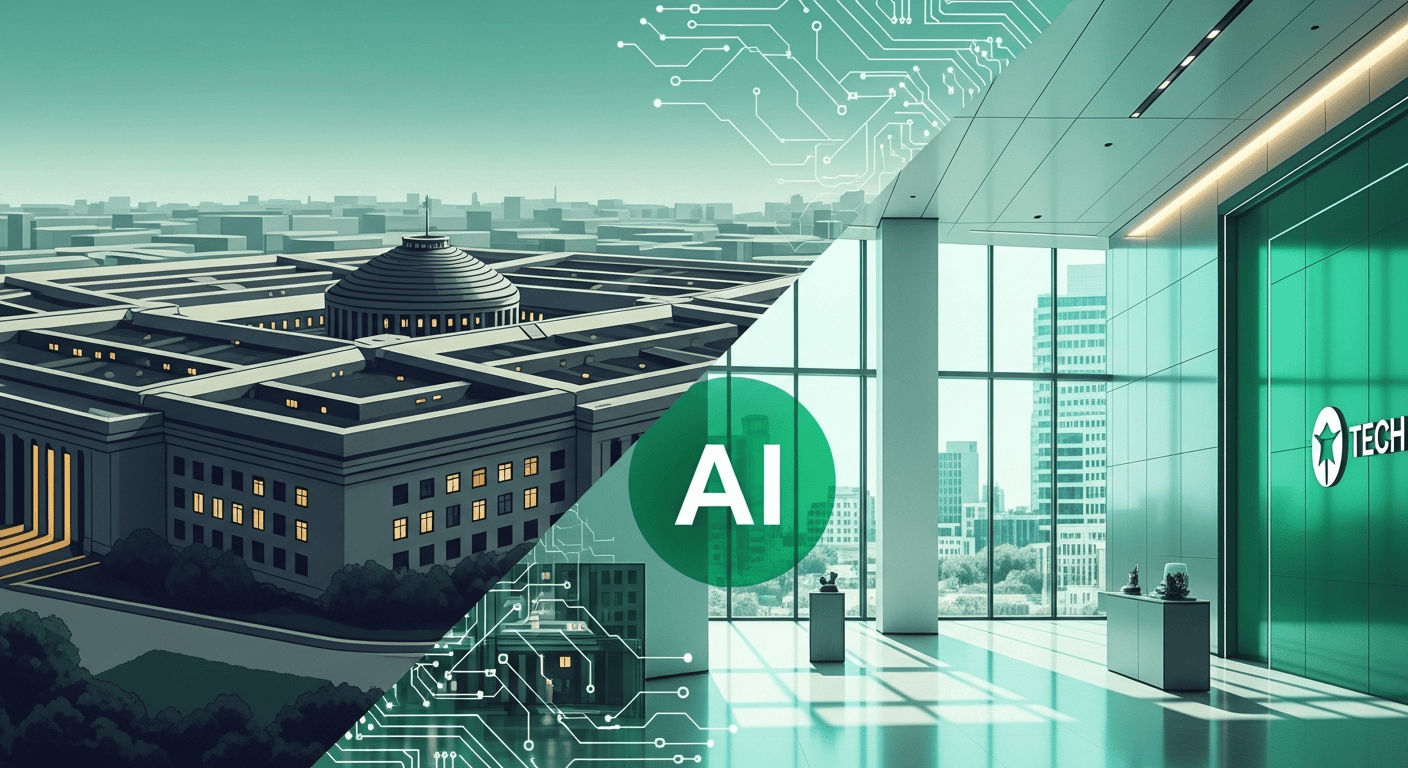
- Google has signed a classified deal with the U.S. Department of Defense granting access to its AI models for “any lawful use” on classified networks.
- The deal follows Anthropic’s refusal to grant the Pentagon unrestricted access, which led the DoD to label Anthropic a “supply-chain risk” — a designation typically reserved for foreign adversaries.
- 950 Google employees signed an open letter urging CEO Sundar Pichai to reject the Pentagon deal and follow Anthropic’s lead on AI guardrails.
- Google is the third AI company — after OpenAI and xAI — to capitalize on Anthropic’s standoff with the Defense Department.
The AI industry’s biggest ethical fault line just cracked wide open. Google has quietly signed a classified agreement with the U.S. Department of Defense, granting the Pentagon access to its AI models on classified networks for essentially any lawful purpose. The deal comes weeks after Anthropic refused similar terms and was branded a national security threat for it — and it arrives over the vocal objections of nearly a thousand Google employees who wanted their employer to take a different path.
The Deal: What Google Agreed To
Classified Networks, Open-Ended Terms
According to reporting from The Wall Street Journal and TechCrunch, Google has granted the DoD access to its AI for use on classified networks. The agreement effectively permits all lawful applications of Google’s models within the defense apparatus. While the contract includes language stating that Google does not intend for its AI to be used in domestic mass surveillance or autonomous weapons — similar to provisions in OpenAI’s Pentagon deal — the WSJ reports it remains unclear whether those provisions are legally binding or enforceable.
Google did not respond to TechCrunch’s request for comment on the deal. The company becomes the third major AI lab to sign a Pentagon agreement in quick succession, following OpenAI in early March and Elon Musk’s xAI shortly after.
Business Insight — The rapid succession of Pentagon AI deals signals a new reality: defense contracts are becoming a litmus test for AI companies. Those willing to accept broad terms gain access to one of the world’s largest technology buyers. Those who set guardrails risk being frozen out entirely.
Anthropic’s Stand — And the Fallout
From Safety Pioneer to “Supply-Chain Risk”
Anthropic’s refusal to grant the Pentagon unrestricted access to its AI models was rooted in its longstanding commitment to AI safety. The company insisted on guardrails that would prevent its technology from being used for domestic mass surveillance and autonomous weapons systems. The Pentagon wanted no such restrictions.
The consequences were swift and severe. The Department of Defense branded Anthropic a “supply-chain risk” — a classification normally reserved for foreign adversaries and compromised vendors. The designation effectively shut Anthropic out of the federal procurement ecosystem. Anthropic responded with a lawsuit, and in March 2026, a federal judge granted the company an injunction against the designation while the case proceeds through the courts.
The Irony: Google Invests $40B in Anthropic While Taking Its Contract
Adding a layer of complexity to the situation, Google recently committed to investing up to $40 billion in Anthropic through a combination of cash and compute resources. Google is simultaneously Anthropic’s largest financial backer and now one of the companies filling the defense void Anthropic’s principled stand created. This duality underscores the tension between financial interests and ethical commitments in the current AI landscape.
Business Insight — The “supply-chain risk” designation is an unprecedented weapon in the government’s procurement arsenal when turned against a domestic AI leader. It establishes a precedent: any AI company that sets ethical boundaries on government use could face similar retaliation, fundamentally reshaping how startups calculate the risk-reward of defense work.
The Employee Revolt Google Ignored
950 Signatures, Zero Impact
Before the deal was finalized, 950 Google employees signed an open letter through the initiative “Not Divided,” urging CEO Sundar Pichai to follow Anthropic’s lead and refuse to sell AI to the Defense Department without meaningful guardrails. The letter asked Google to set clear boundaries on how its AI could be used in military and surveillance contexts.
Google proceeded with the deal regardless. The episode echoes the 2018 Project Maven controversy, when thousands of Google employees protested the company’s work on a Pentagon AI drone surveillance program. Google eventually pulled out of that contract. This time, the calculus appears to have changed: the AI defense market is far larger, the competitive pressure far greater, and the political environment far less tolerant of refusal.
Business Insight — The failed employee petition signals a power shift inside Big Tech. In 2018, Google’s workforce could force the company to abandon a military AI contract. In 2026, nearly a thousand signatures changed nothing. As AI defense revenue scales into the tens of billions, employee activism is losing its veto power over corporate strategy.
What This Means for the AI Defense Market
Three Companies In, One Blacklisted
The Pentagon’s AI vendor landscape now looks starkly divided. OpenAI, xAI, and Google have all signed agreements granting broad access. Anthropic remains locked in litigation, its models excluded from classified networks. The practical effect is that the U.S. military’s AI stack is being built on the backs of companies willing to accept open-ended terms — while the one company that insisted on restrictions is being punished for it.
For enterprise buyers and allied governments watching this play out, the implications are significant. The AI models being deployed in defense contexts will shape everything from intelligence analysis to logistics to potentially lethal autonomous systems. The guardrails — or lack thereof — written into these contracts today will define the boundaries of military AI for years to come.
The Market Opportunity at Stake
The U.S. defense AI budget is projected to exceed $30 billion annually by 2028, according to industry estimates. For Google, whose cloud division has been aggressively courting government clients, the Pentagon deal is a gateway to the most lucrative and sticky customer base in the world. Federal contracts, once won, tend to expand and renew for decades. Saying no to the Pentagon doesn’t just cost one deal — it costs an entire market.
Business Insight — The AI defense market is splitting into two tiers: companies with classified-network access and everyone else. For startups and mid-tier AI firms, the message is clear — building for defense means accepting the government’s terms, not the other way around. This will likely drive a wave of defense-specialized AI companies that design their products and policies around government requirements from day one.
Related
- The Pentagon Has Labeled Anthropic a Supply-Chain Risk
- Anthropic Wins Injunction Against Trump Administration Over Defense Dept. Saga
- OpenAI Shares More Details About Its Agreement With the Pentagon
- Warren Presses Pentagon Over Decision to Grant xAI Access to Classified Networks
- Google to Invest Up to $40B in Anthropic in Cash and Compute
Sources
- TechCrunch — Google expands Pentagon’s access to its AI after Anthropic’s refusal (April 28, 2026)
- CNBC — Pentagon AI chief confirms work with Google after Anthropic blacklist (April 28, 2026)
- Engadget — Google and the Pentagon sign classified deal for unfettered AI access (April 2026)
- SiliconANGLE — Hundreds of Google employees sign letter urging CEO to reject military AI use (April 27, 2026)
AI Biz Insider · AI Business EN · aibizinsider.com
댓글 남기기