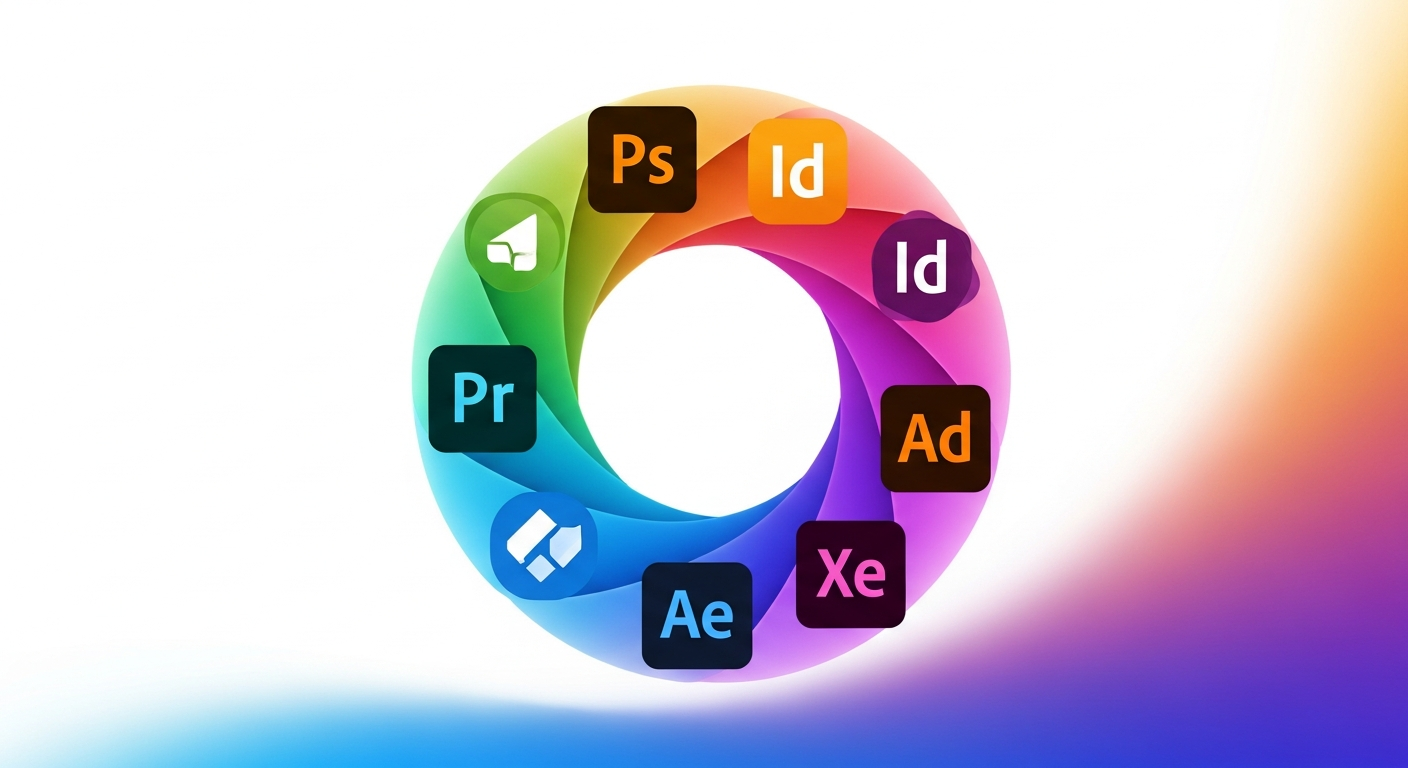
- Adobe’s new Firefly AI Assistant orchestrates multi-step workflows across Photoshop, Premiere, Illustrator, Lightroom, Express and the entire Creative Cloud from a single conversational prompt.
- The assistant ships with pre-built Creative Skills for common tasks and lets users build custom skills, turning repetitive workflows into one-click automations.
- Adobe partnered with Anthropic to integrate Claude, giving creators access to third-party AI models directly inside the assistant.
- Public beta opens in the coming weeks, with live demos planned for Adobe Summit (April 19-22 in Las Vegas).
Adobe quietly redefined its entire product strategy on April 15, 2026. Rather than bolting AI features onto individual apps, the company launched the Firefly AI Assistant, an agentic interface that sits above the Creative Cloud and treats Photoshop, Premiere Pro, Illustrator, Lightroom, and Adobe Express as interchangeable tools in a single conversational workflow. For creative professionals juggling six or seven Adobe apps daily, the implications are immediate: describe the outcome, and the assistant figures out which tools to use, in what order, and how to stitch the results together.
How It Works: One Prompt, Multiple Apps
Conversational Orchestration
The Firefly AI Assistant operates as a meta-layer across Creative Cloud. Users describe a desired outcome in natural language, and the assistant breaks the task into discrete steps, assigns each step to the appropriate Adobe application, executes the work, and returns editable output. A request like “resize my hero image for Instagram, TikTok, and LinkedIn, extend the background where needed, and export optimized files” would previously require switching between Photoshop, Firefly, and Express. The assistant handles the entire chain in one pass.
Creative Skills Library
Adobe introduced a concept called Creative Skills: pre-built, composable workflows that compress multi-step processes into single triggers. One example skill takes a portrait photo and automatically retouches it with consistent presets, crops it for multiple social platforms using Generative Extend, converts stills to short animations, optimizes file sizes, and saves everything to Creative Cloud storage. More importantly, users can build their own skills, effectively teaching the assistant their personal workflow patterns.
Adaptive Learning
The assistant tracks tool preferences, aesthetic choices, and workflow habits over time, adjusting its suggestions accordingly. Adobe frames this as the system becoming a personalized creative partner rather than a generic chatbot. All final outputs remain fully editable in native file formats with pixel-level precision, addressing a common concern among professionals that AI tools produce locked or degraded results.
AI Biz Insider Analysis ― This is Adobe’s clearest move yet from selling tools to selling outcomes. The Creative Skills framework is particularly significant: by letting users codify their own workflows, Adobe creates a stickiness layer that competing AI tools cannot easily replicate. If a designer has spent months training the assistant on their brand guidelines, color grading preferences, and export specifications, switching to a rival platform means rebuilding all of that institutional knowledge from scratch. The Anthropic partnership also signals Adobe’s willingness to be model-agnostic, a strategic hedge against any single AI provider gaining too much leverage.
The Anthropic Connection and Competitive Context
Claude Integration
Adobe confirmed it worked with Anthropic to bring Firefly AI Assistant compatibility to Claude, meaning creators can trigger Adobe workflows from within Claude’s interface. This is a two-way street: Adobe gains distribution through one of the fastest-growing AI platforms, while Anthropic deepens its enterprise utility beyond code and text. For businesses already running Claude for knowledge work, the integration means creative production can happen in the same environment without context switching.
From Project Moonlight to General Availability
The Firefly AI Assistant evolved from Project Moonlight, which Adobe first previewed at Adobe MAX and then refined through a private beta. The transition from research prototype to public beta in a matter of months suggests Adobe is accelerating its AI deployment cadence. Adobe Summit, running April 19-22 in Las Vegas, will feature live demonstrations and deeper technical sessions for enterprise customers evaluating the tool for production workflows.
The Competitive Landscape
Adobe’s move arrives as multiple players compete for the AI-powered creative workflow market. Canva has been adding AI features aggressively, Figma is deepening its generative design capabilities, and standalone AI image generators like Midjourney continue to gain traction. Adobe’s advantage lies in its installed base of over 30 million Creative Cloud subscribers and the depth of its professional-grade tooling. The Firefly AI Assistant effectively turns that entire ecosystem into a single, prompt-driven interface, raising the bar for what competitors must match.
What This Means for Enterprise Creative Teams
For marketing departments and creative agencies, the Firefly AI Assistant could fundamentally alter staffing models. Tasks that currently require a Photoshop specialist, a video editor, and a motion designer working in sequence could theoretically be handled by a single creative director issuing high-level prompts. Adobe is careful to frame the assistant as an amplifier rather than a replacement, emphasizing that “the creative vision is always yours.” But the productivity implications are hard to ignore: if one person can now orchestrate the output of an entire creative pipeline, the economics of content production shift dramatically.
The pricing model remains undisclosed, which will be the critical variable for adoption. If Adobe bundles the assistant into existing Creative Cloud subscriptions, uptake could be rapid. If it comes as a premium add-on with per-prompt or compute-based pricing, enterprise procurement teams will need to run ROI calculations against their current headcount and tool spending.
Related
- OpenAI and Google Both Shipped Agent SDKs on the Same Day
- Anthropic Tripled Its Revenue in 4 Months
- Hightouch Hit $100M ARR With AI Marketing Agents
- Google Shipped a Native Gemini App for Mac
Sources
- TechCrunch – Adobe’s new Firefly AI assistant can use Creative Cloud apps to complete tasks
- Adobe Blog – Introducing Firefly AI Assistant
AI Biz Insider · AI Business EN · aibizinsider.com
댓글 남기기