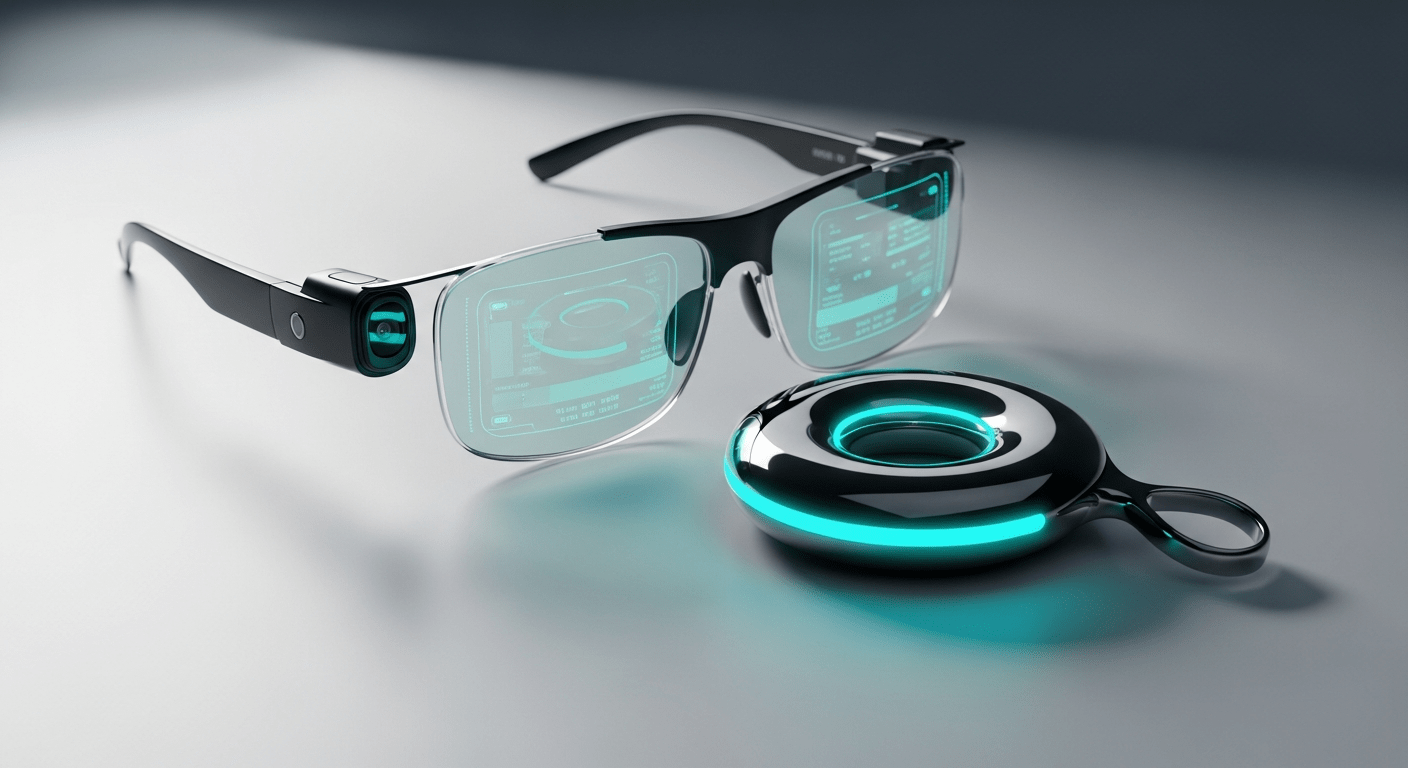
- Meta is developing an AI pendant slated for testing within a year, built on its late-2025 acquisition of startup Limitless.
- Reality Labs lost $4 billion in Q1 2026 alone, raising the stakes on every hardware bet Meta makes next.
- OpenAI’s Jony Ive device has slipped to no earlier than February 2027 and reportedly will not be a wearable.
- The first wave of AI wearables (Humane AI Pin, Friend) flopped over privacy backlash and thin usefulness.
What makes the smartest companies in tech keep building a product category consumers have already rejected twice? A leaked Meta memo this week says the company is quietly developing an AI-powered pendant, even as its hardware division hemorrhages billions. Meta is not alone. The race to put artificial intelligence on your body is heating up again, and the contenders are betting the third attempt will finally stick.
Meta’s Pendant Play
According to a memo viewed by The Information and first reported by TechCrunch on May 30, Meta plans to begin testing an AI-powered pendant within the next year. The device builds directly on Limitless, the AI hardware startup Meta acquired at the end of 2025. Limitless made a clip-on pendant that recorded a wearer’s conversations and surfaced AI-generated summaries and recall; at the time of the deal Meta said the goal was to “accelerate our work to build AI-enabled wearables.”
A bigger hardware push, not a one-off
The pendant is one piece of a broader plan. The same memo reportedly outlines an expanded lineup of AI glasses and a business subscription called “Wearables for Work,” signaling Meta wants to sell ambient AI to enterprises, not just consumers. The urgency is financial: Meta’s Reality Labs division lost roughly $4 billion in the first quarter of 2026, and leadership is clearly hunting for a hardware category that can finally justify the spend.
Trend Insight — A “Wearables for Work” subscription is the quiet tell. Meta is hedging consumer skepticism by chasing recurring enterprise revenue, where always-on meeting capture and recall have a clearer ROI than a lifestyle gadget.
Why the First Wave Failed
The graveyard of AI wearables is the elephant in the room. Humane’s AI Pin collapsed in early 2025, with HP buying the startup’s assets for $116 million after the product failed to find an audience. The companion-pendant maker Friend spent more than $1 million on a New York City subway ad campaign, only to watch commuters scrawl “surveillance tool” across the posters. Two failure modes recur: devices that simply were not useful enough to replace a phone, and devices whose always-listening design triggered immediate privacy backlash.
The trust problem is the product problem
When Big Tech started scooping up these startups in late 2025, existing customers grew uneasy about who would own their most intimate recordings. For Meta in particular — a company already under scrutiny over data practices — convincing people to wear an always-on microphone is as much a trust challenge as an engineering one. That is precisely why the enterprise angle matters: a worker consenting to meeting capture is a far easier sell than a stranger recording a coffee shop.
OpenAI Takes a Different Path
While Meta leans into the pendant form factor, OpenAI is deliberately avoiding it. The device Sam Altman is building with legendary designer Jony Ive has slipped to no earlier than February 2027, pushing back earlier hopes of a late-2026 launch. More tellingly, LoveFrom’s hardware chief has said the first prototype is “not an in-ear device, nor a wearable device” — a pointed contrast with the pendant-and-glasses crowd. Reporting and patent leaks have floated everything from a palm-sized screenless companion to AI earbuds, underscoring how unsettled the category’s winning shape still is.
Trend Insight — The split is strategic. Meta is iterating fast on proven (if unloved) form factors to capture data and distribution now; OpenAI is moving slowly to define a new one. The first approach risks repeating past flops; the second risks ceding the market while it deliberates.
What It Means for Business Leaders
For executives, the signal is not “buy an AI pendant” — it is that ambient, always-available AI is becoming a platform battleground, and the interface layer is up for grabs. If hardware giants succeed in normalizing wearable capture for work, the competitive moat shifts from which model you use to who owns the stream of real-world context feeding it. Leaders should watch three things: how consent and data-ownership terms are written into “for work” offerings, whether glasses (already a shipping product) outpace pendants, and which platform locks in developers first. The companies that controlled the smartphone interface defined a decade of software; the same prize is on the table now.
Related
- Why Apple and OpenAI Are Betting on AI Hardware in 2026
- Meta Acquires AI Device Startup Limitless
- Humane’s AI Pin Is Dead as HP Buys Assets for $116M
- Anthropic Raises $65B, Nears $1T Valuation Ahead of IPO
- Asana Acquires No-Code Agent Builder StackAI
Sources
- TechCrunch — Meta is reportedly developing an AI pendant (May 30, 2026)
- Scientific American — Why Apple and OpenAI Are Betting on AI Hardware in 2026
AI Biz Insider · AI Trends EN · aibizinsider.com
댓글 남기기